Key Takeaways
- Singapore homes most commonly use split or multi-split systems, quiet, energy-efficient, and NEA-rated.
- Cassette and ducted aircons suit larger spaces, open-plan layouts, and commercial environments.
- VRF/VRV systems are the premium choice for offices, hotels, and large landed properties.
- Inverter technology significantly reduces electricity bills for units used daily, worth the premium.
- Choosing the wrong aircon type leads to uneven cooling, higher bills, and premature wear.
Buying an air conditioner in Singapore involves more than picking a brand. The type of system you install determines how effectively it cools your space, how much energy it consumes, and how much you spend on long-term servicing. With so many options available, it pays to understand what each system does and who it is best suited for.
This guide covers all 7 types of aircon used in Singapore, from the ubiquitous wall-mounted split unit to commercial-grade VRF systems, with honest pros, cons, and recommendations for different property types.

1. Split Air Conditioners: The Most Popular Type in Singapore
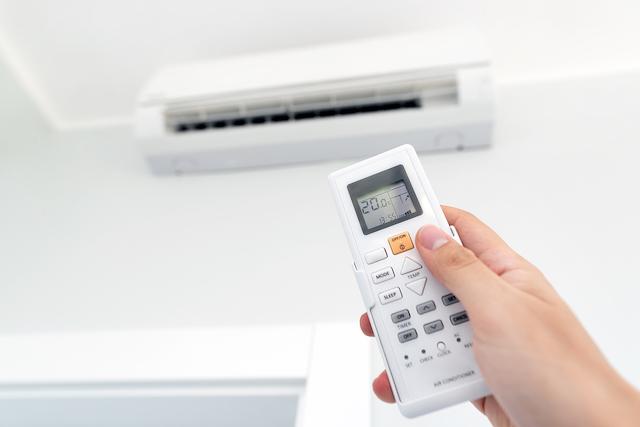
Split air conditioners are the single most common aircon type in Singapore homes, accounting for the majority of residential installations across HDB flats, condos, and landed properties.
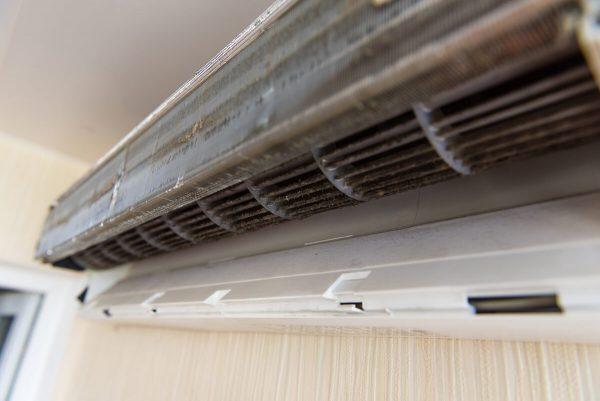
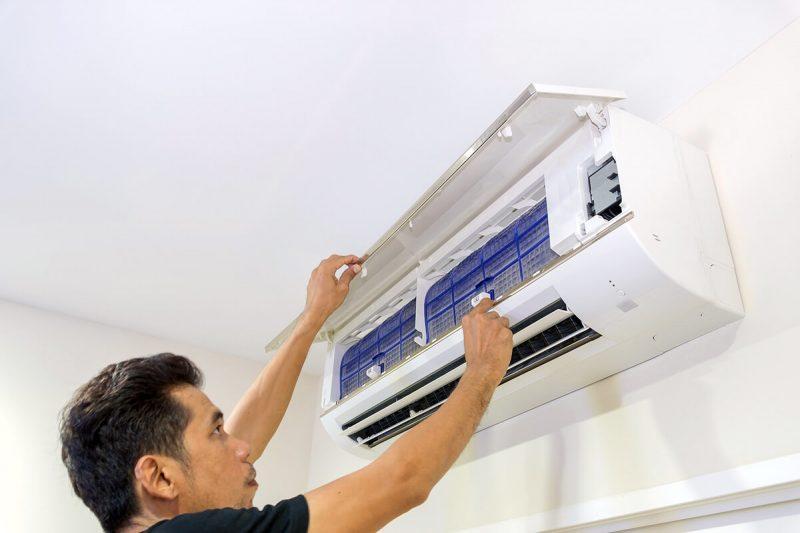
The system has two components: an indoor wall-mounted unit that blows cool air into the room, and an outdoor compressor unit that expels heat. The two are connected via refrigerant piping that passes through the wall.
Best for: HDB flats, condos, individual bedrooms and living rooms
Pros:
- Quiet operation: the compressor sits outdoors, so indoor noise levels are low
- Energy-efficient, especially inverter models
- Wide range of brands, models, and price points
- Straightforward to service and maintain
Cons:
- Each indoor unit requires its own outdoor compressor (unless you upgrade to multi-split)
- Not ideal for very large open-plan spaces
2. Multi-Split Air Conditioners: Best for Whole-Home Cooling
Multi-split systems connect multiple indoor units, typically 2 to 5, to a single outdoor compressor. They are the standard choice for Singapore homeowners cooling an entire flat or apartment from one outdoor unit.
Best for: 3-room to 5-room HDB flats, condos, small offices
Pros:
- One outdoor unit serves multiple rooms, saves ledge space and reduces installation costs
- Individual temperature control per room
- More energy-efficient than running several separate single-split units
- Cleaner installation overall
Cons:
- If the outdoor unit fails, all connected indoor units stop functioning
- Higher upfront cost than a single split system
- Sizing must account for the combined load of all indoor units
3. Cassette Air Conditioners: Sleek Ceiling Cooling for Larger Spaces
Cassette aircons are ceiling-mounted units that distribute cool air in four directions simultaneously, making them ideal for large rooms, open-plan layouts, and commercial environments where a wall-mounted unit cannot provide even coverage.
The indoor unit sits flush with a false ceiling, with only the grille panel visible, giving rooms a clean, uncluttered aesthetic.
Best for: Large living rooms, offices, retail shops, restaurants, landed property common areas
Pros:
- 360-degree airflow provides even, uniform cooling across wide spaces
- Discreet ceiling installation: no visible wall unit
- Powerful enough for large or high-ceiling spaces
- Well suited to open-plan commercial environments
Cons:
- Requires a false ceiling for installation, not suitable for all homes
- Higher installation cost than split systems
- Servicing is more complex and typically costs more
If you are looking to install or service a cassette system, Airple's cassette aircon Singapore team handles all major brands and ceiling configurations.
4. Ducted Air Conditioners: Concealed Cooling for Premium Homes and Offices
Ducted aircon systems use a central air handling unit concealed within the ceiling void, connected to a network of ducts that deliver conditioned air through discreet vents in each room. The result is completely invisible cooling: no visible indoor units, no wall clutter.
Best for: Landed properties, large condominiums, commercial buildings, offices undergoing renovation
Pros:
- Entirely concealed: vents in the ceiling are the only visible element
- Consistent, uniform cooling across multiple zones from a single system
- Quieter operation than most wall-mounted alternatives
- Can be zoned to allow different temperatures in different rooms
Cons:
- High installation cost: best planned during construction or renovation
- Requires sufficient ceiling void space for ductwork
- Duct maintenance (cleaning, mould prevention) adds to long-term servicing costs
- Less flexible for retrofits in completed properties
Ducted systems require specialist installation and servicing expertise. Airple's ducted aircon Singapore service covers installation, maintenance, and repairs for both residential and commercial ducted systems.
5. Window Air Conditioners: Compact and Affordable
Window units are self-contained systems where all components: compressor, condenser, evaporator are housed in a single box that fits into a window frame or wall opening. They were more common in older Singapore HDB flats and remain a practical option for rental units and budget installations.
Best for: Single rooms, rental apartments, budget cooling, older HDB flats
Pros:
- Low purchase price: one of the most affordable aircon options
- Simple installation: no piping or separate outdoor unit required
- Easy to replace without major works
Cons:
- Noisier than split systems: the compressor sits inside the room
- Less energy-efficient than modern split or inverter systems
- Less aesthetically pleasing
- Not suitable for rooms without a window opening or wall penetration
6. Portable Air Conditioners: Flexible but Limited
Portable aircons are freestanding units that require no permanent installation. They exhaust hot air through a flexible hose vented through a window or wall gap, and can be moved between rooms as needed.
Best for: Temporary cooling, server rooms, rooms without permanent aircon, as a backup unit
Pros:
- No installation required: plug in and use immediately
- Can be relocated to wherever cooling is needed
- Useful as a stop-gap while awaiting permanent installation
Cons:
- Significantly less energy-efficient than any fixed system
- Noisier in-room operation
- The exhaust hose limits flexibility in placement
- Not effective for whole-room cooling in larger spaces
Portable units are best treated as a short-term or supplementary solution, not a primary cooling system for everyday Singapore use.
7. Centralised Cooling Systems: Singapore's Emerging Residential Option
Centralised cooling systems distribute chilled water or refrigerant through a building-wide network, cooling multiple units from a single plant. They are the standard in large commercial buildings, shopping malls, and hotels, and are now being trialled in Singapore's residential sector.
Singapore context: HDB's pilot at Tengah BTO introduced a district cooling system as part of its eco-town initiative, where residents tap into a shared cooling network rather than installing individual outdoor compressors. The concept reduces the number of outdoor units on building facades and is designed to be more energy-efficient at scale.
Current reality for homeowners: Mixed reception. Residents raised concerns about bulkier trunking aesthetics, condensation issues, and limited individual control. The system is also managed by a third-party operator, meaning servicing and fault resolution fall outside the homeowner's direct control.
Best for: Large commercial buildings, hotels, and HDB developments where the system is pre-installed
Pros:
- No individual outdoor compressor unit required
- Potentially more energy-efficient at building scale
- Reduces facade clutter across the development
Cons:
- Not a homeowner choice: pre-determined by the developer or town council
- Limited individual control compared to split systems
- Ongoing concerns about trunking aesthetics in residential use
- Servicing is handled by the building operator, not the resident
Making the Right Choice

With so many different types of aircon available, consider your space, budget, and cooling needs to find the right option. For smaller spaces, going with window or portable aircon units is a smart choice. Similarly, split and ductless mini-splits offer the best energy efficiency but are no match for central aircon units when it comes to convenience and coverage. Regardless of which system you choose, regular aircon servicing is essential to maintain optimal performance, extend the lifespan of your unit, and ensure clean, healthy air circulation in your space.
At Airple, our team of experienced professionals in Singapore is dedicated to making the installation and servicing seamless and hassle-free. Reach out today, and let’s work together to keep your home cool and comfortable!
Sign up for our newsletter
Get the best content on user insights, design, and product management delivered to your inbox every week.
Share This Article